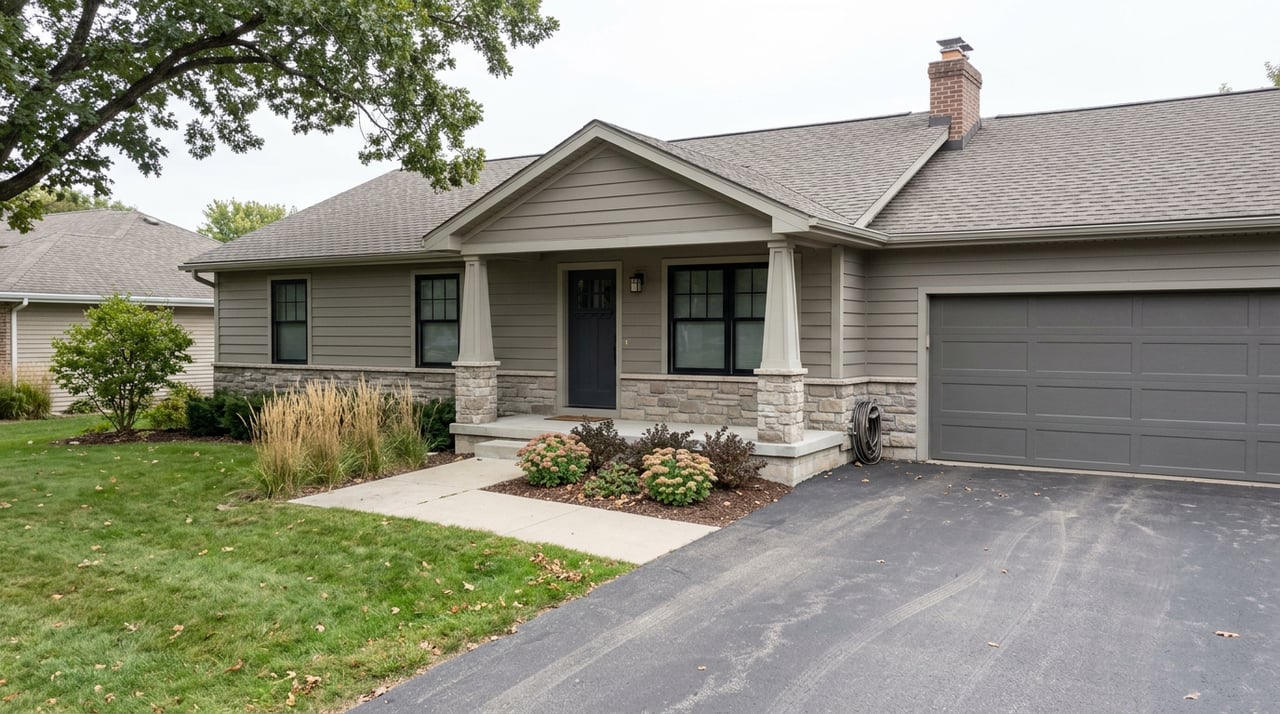
Why Two Windsor Homes At The Same Price Can Have Very Different Monthly Payments
September 3, 2026
September 3, 2026
You find two houses in Windsor listed within a few thousand dollars of each other. Same square footage, same finish level, same commute to Old Town. Your lender runs the numbers and the monthly payment on one comes back noticeably higher than the other. The list price doesn't tell the whole story. The payment estimate may leave out a question that helps explain the gap: is this address inside a metro district, and if so, what did the bonds behind that district lock in before you ever saw the listing.
That question matters more in Windsor right now than it has in years, and not for the reason most buyers assume.
A metropolitan district is a local government, created under Colorado's Special District Act, that a developer sets up to pay for the roads, water lines, sewer, drainage, and parks a new subdivision needs before a single house sells. The district borrows the money through bonds, then repays that debt over decades using a property tax mill levy charged only to homes inside its boundaries. Windsor has built a lot of its newer housing stock this way. RainDance, Windsor Highlands, and Greenspire at Windsor Lake all sit inside metro districts. Windsor's own government explains the basic mechanics on its metro districts page, and the Town adopted a model service plan back in 2015 to standardize how these districts get approved.
None of that is unusual for the Front Range. What buyers miss is that a metro district mill levy is not a fee you negotiate or a monthly bill you can choose to skip. It rides on your property tax statement alongside county, school, and fire district mills, and in a district still repaying construction bonds, it can be one of the largest single line items on that bill.
Before you write an offer on a home in a Windsor subdivision, get in the habit of asking:
Ask for this information before you fall in love with the house.
Windsor straddles Larimer and Weld counties. Property tax data compiled from Larimer County records shows Windsor's 80550 ZIP code carrying a median effective property tax rate of 0.77 percent. The median tax bill in 80550 runs to $6,265.
Weld County's own tax office underscores how much tax bills can vary by parcel. The county maintains roughly 150 overlapping tax districts that combine into more than 1,500 distinct tax areas, with total mill levies ranging from about 60 mills to 148 mills depending on exactly which combination of jurisdictions covers your parcel. A median price tells you what the county assessor thinks a house is worth. It tells you nothing about which of those 1,500 tax areas the house sits in.
Here's the part that surprises even buyers who already know what a metro district is.
Colorado has spent the last few years cutting residential assessment rates and adding valuation subtractions, changes meant to soften homeowners' tax bills statewide. RainDance's metropolitan districts illustrate why that relief doesn't land evenly. RainDance Metropolitan Districts' 2026 budget presentation says the district's debt-service mill levy was set at 39 mills when its bonds were issued, and the bond covenants require the board to adjust that levy whenever the state changes assessment rates, specifically so that district tax revenue is neither increased nor decreased by the change. In plain terms, if the state cuts the assessment rate to lower everyone's tax bill, a bonded metro district can raise its own mill rate to collect the same dollar amount it would have collected anyway.
| District | What the levy does | Why it matters to a buyer |
|---|---|---|
| RainDance Metropolitan Districts 1 to 4 (Windsor) | Debt-service levy set at 39 mills, contractually adjusted to hold revenue flat against state assessment-rate changes | State tax relief doesn't automatically shrink this bill |
None of this makes a metro-district home a bad purchase. It funds real infrastructure, and in a fast-growing town like Windsor that infrastructure is why the roads and parks exist on day one instead of years later. It does mean the monthly number a mortgage calculator spits out from list price alone is missing a variable that can run into the hundreds of dollars.
The RainDance example isn't a relic of a single legislative change that already happened and is now behind us. The underlying pressure is structural. Metro district bonds get priced and sold on the assumption that assessed values, and the tax revenue tied to them, will keep climbing enough to cover debt payments for decades. Colorado's assessment rate has already moved more than once in the past few years, and each time it does, districts with covenants like RainDance's are contractually obligated to true the levy back up rather than let bondholders take the hit.
That means the mill levy line on a bonded district's tax bill isn't a fixed number you can lock in from a listing sheet. It can change in response to state tax policy under covenants that preserve bond revenue. Whatever changes come next out of Denver, the mechanism stays the same: treat a district's current mill levy as a snapshot of today, not a promise about next year.
Build your comparison on more than principal, interest, and the number a generic online payment estimator generates from list price alone. For any home inside a Windsor metro district, ask the listing agent or seller for the district's most recent adopted budget and its current mill levy split between debt and operations. Check the Larimer or Weld County assessor's parcel page directly, since both counties publish which tax areas and mill levies apply to a specific address. If a bond maturity date is available in the district's filings, ask for it. A district retiring debt in five years carries a very different long-term picture than one financing bonds that mature in the 2050s.
None of this is tax advice, so confirm current numbers with the county treasurer before you write an offer. What it is, is the difference between comparing two houses on price and comparing them on what they'll actually cost you every month for the next several decades.
If you're weighing a newer Windsor subdivision against an established neighborhood and want help pulling the actual mill levy and bond history for a specific address before you get attached to it, Manny P Sells Homes can walk through that math with you before you write an offer, not after you're already under contract.
Is a metro district the same thing as an HOA? No. They are different, and a single property can sit inside both.
If Colorado cuts assessment rates again, will my metro district bill go down? Not automatically. Districts with covenants like RainDance's are written to adjust the mill levy specifically to offset state-level assessment changes, so a statewide cut doesn't necessarily translate into a lower district bill. Ask the district directly how its own covenants handle a future rate change before you assume the relief will reach you.
Stay up to date on the latest real estate trends.



Buying or selling a home is a big step—one you shouldn’t take alone. I combine local expertise, clear communication, and a results-driven approach to help you achieve your real estate goals. Let’s move forward together and make your next chapter a success.