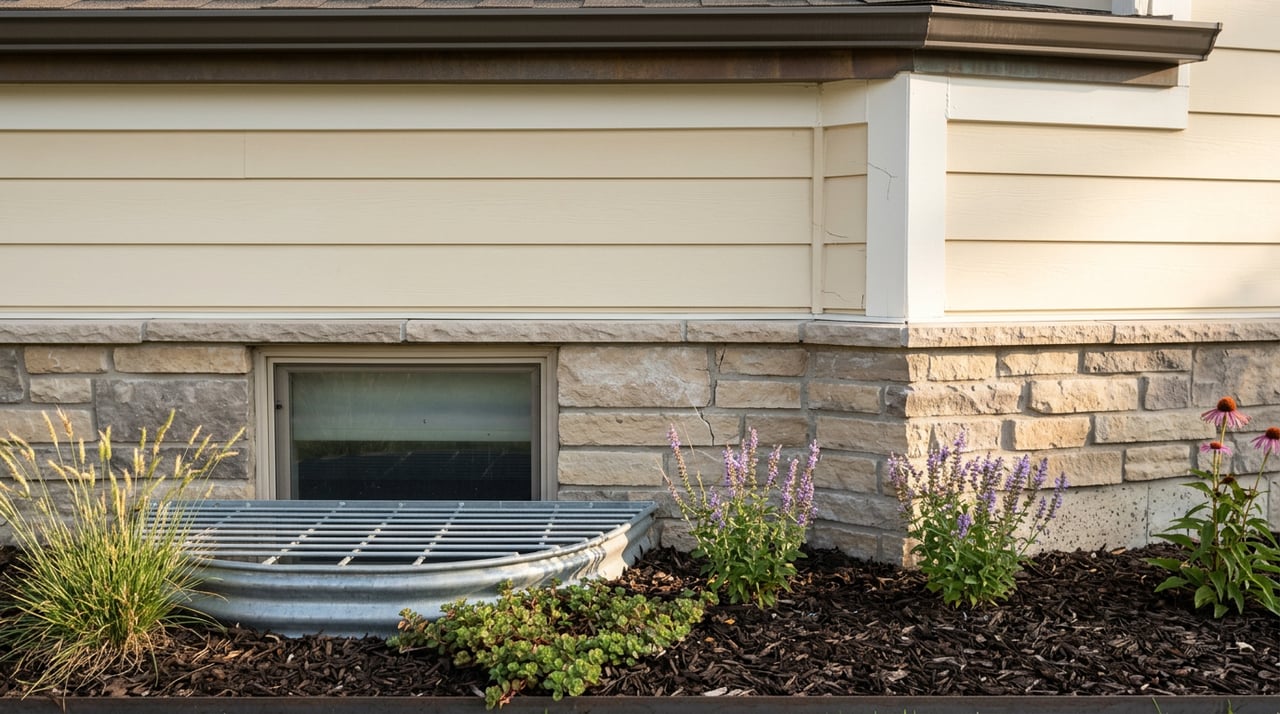
Why A Fort Collins Radon Test Can Pass In June And Fail In January
August 13, 2026
August 13, 2026
If a Fort Collins seller hands you an inspection report this month showing a radon reading under 4.0 picocuries per liter, what does that number actually tell you about the house in January?
Less than most buyers assume. Not because anyone lied. Because the test that produced that number was very likely taken during the exact months when Fort Collins homes read the lowest, and closed on a schedule that has nothing to do with when radon actually peaks. That gap between testing season and risk season is the part of this transaction that rarely makes it into a buyer consultation, and it matters more than the disclosure paperwork itself.
Colorado's radon disclosure statute, SB23-206, took effect on August 7, 2023, and it changed what has to appear in every residential sales contract in the state. Sellers must now disclose any known radon test results, mitigation history, and whether a mitigation system has been installed, and the contract itself must carry a bold-faced warning that residential property may expose occupants to dangerous levels of radon gas.
That warning is not optional language a broker can soften. Colorado's Division of Real Estate spells out the required wording directly, and it opens with a line every Fort Collins buyer should actually read before signing anything: "residential real property may present exposure to dangerous levels of indoor radon gas."
Here is the part that gets missed. The law obligates a seller to disclose what they know. It does not obligate them to know anything at all. A seller who has never tested has nothing to report, and reporting nothing is fully compliant. The Colorado Seller's Property Disclosure form lists radon under Environmental Conditions and only requires disclosure if the seller is aware radon exists or has ever existed in the home, even when a prior test came back below the 4.0 threshold. If no one ever tested, the box stays blank, and the buyer is the only party in the transaction who might discover a problem, usually during their own inspection window.
The reason this matters more in Fort Collins than in most of the country comes down to what's under the foundation. The Front Range sits on uranium-bearing granite bedrock, and as that uranium decays it releases radon gas that migrates upward through soil and into homes through foundation cracks, sump pits, and crawl spaces. The EPA classifies Larimer County under Radon Zone 1, its highest-risk designation.
Larimer County's own radon map puts the area's average indoor reading at 7.8 picocuries per liter, roughly six times the national average of 1.3. The highest single reading ever recorded in the county hit 1,147 picocuries per liter. Local testing firms estimate that somewhere between half and 57 percent of homes tested in Larimer County come back above the EPA's 4.0 action level, and one local mitigation company puts the share reading above 10 picocuries per liter at around 15 percent. Two houses next door to each other, built from the same plans, can post completely different numbers because the soil beneath a foundation and the specific cracks in that foundation are never quite identical from lot to lot.
This is the mechanism that actually catches people off guard, and it has nothing to do with construction quality or soil composition. It has to do with the thermostat.
Radon enters a home through a process called the stack effect. Heated indoor air rises and escapes through the upper floors, and that rising air creates negative pressure in the basement that pulls soil gas up through the foundation at a faster rate. In summer, houses are more likely to have windows open and less heating running, so the pressure differential is smaller and readings drop. In winter, with the furnace running and the house sealed tight, the same house pulls in more soil gas and reads higher.
Local radon professionals report that Fort Collins winter readings commonly run 30 to 50 percent higher than summer readings taken in the same house. A test conducted under an August contract, which is exactly the season the market is in right now, is measuring the house at its best-case scenario for the year. The EPA's own testing protocol calls for closed-house conditions, windows shut and HVAC running normally, for accuracy, which is a description of a Fort Collins home in January far more than one in August.
| Testing Season | What The Reading Tends To Show |
|---|---|
| Summer, windows open, minimal heating | Lower reading, may sit comfortably under 4.0 |
| Winter, closed-house conditions, furnace running | Same house often reads 30 to 50 percent higher |
A test result from a summer transaction is not wrong. It is accurate for the conditions it was taken under. It is just not a reliable prediction of what that same house will do the first cold week of January, which is the point buyers rarely get told.
If a test does come back at or above 4.0, the fix is usually a sub-slab depressurization system, a fan-driven setup that vents soil gas outside before it enters the living space. The Colorado Department of Public Health and Environment estimates most mitigation systems run between $1,000 and $2,000 installed. Some homes already have a passive radon system built in from construction, which can lower that cost further, though even new construction with passive features can still test above the action level, so a passive system is not a guarantee on its own.
Timeline matters just as much as cost inside a closing deadline. Local radon contractors typically quote 7 to 14 days from initial contact to installation, and several specifically note they can compress that to about a week when a real estate closing date is on the line, including a post-installation verification test to satisfy lender and inspection requirements. Colorado purchase contracts commonly build a radon contingency around the EPA's 4.0 threshold directly, letting a buyer request mitigation as a cure rather than walking away, which keeps a high reading from automatically killing a deal.
The most useful move for both buyers and sellers in Fort Collins is testing before a contract deadline is forcing the timeline. Larimer County's Department of Health and Environment, working with CSU Extension, distributes free short-term test kits with prepaid postage to the lab. In January 2026, the county highlighted its winter distribution, since testing during the colder months gives the most accurate read on a home's actual exposure. Pickup locations include:
January is designated Radon Action Month statewide, but the kits and the underlying advice apply any time of year. A seller who tests in winter before listing has a real number to put on the disclosure form instead of a blank box. A buyer who tests in winter, or asks for a contingency tied to a winter retest, is pricing the house on the season that actually matters.
Does every home in Fort Collins have elevated radon? No. Radon levels vary from house to house even on the same block, because the soil path and the specific foundation, not the neighborhood, drive the reading. A neighbor's clean test says nothing about your own home.
If a home already has a passive radon system, is that enough? Not automatically. Even new construction built with passive radon-resistant features can still test above the 4.0 action level. A passive system reduces the cost and time of adding an active fan, but it does not replace the need to test.
Can I write a radon contingency into my offer? Yes. Contingency language tied to the EPA's 4.0 threshold, with mitigation as the agreed cure rather than automatic termination, is standard practice in Colorado purchase contracts.
When is the best time to test if I'm buying or selling this summer? A summer test is still useful for disclosure purposes, but if you want the most defensible number, a winter retest under closed-house conditions is what actually reflects worst-case exposure.
Radon is one of those details that never shows up in a listing photo and rarely comes up until an inspection report lands in your inbox with a number on it. Knowing what that number is actually measuring, and what season it was measured in, is the difference between a smooth negotiation and a surprise renegotiation two weeks before closing. If you're weighing a purchase or a listing in Fort Collins and want a second set of eyes on what a specific report means for your timeline, Manny P Sells Homes can walk through it with you and connect you with the local mitigation contractors who already know how to work within a Front Range closing date. Get Your Free Home Valuation and let's talk before you write the offer.
Stay up to date on the latest real estate trends.


Buying or selling a home is a big step—one you shouldn’t take alone. I combine local expertise, clear communication, and a results-driven approach to help you achieve your real estate goals. Let’s move forward together and make your next chapter a success.