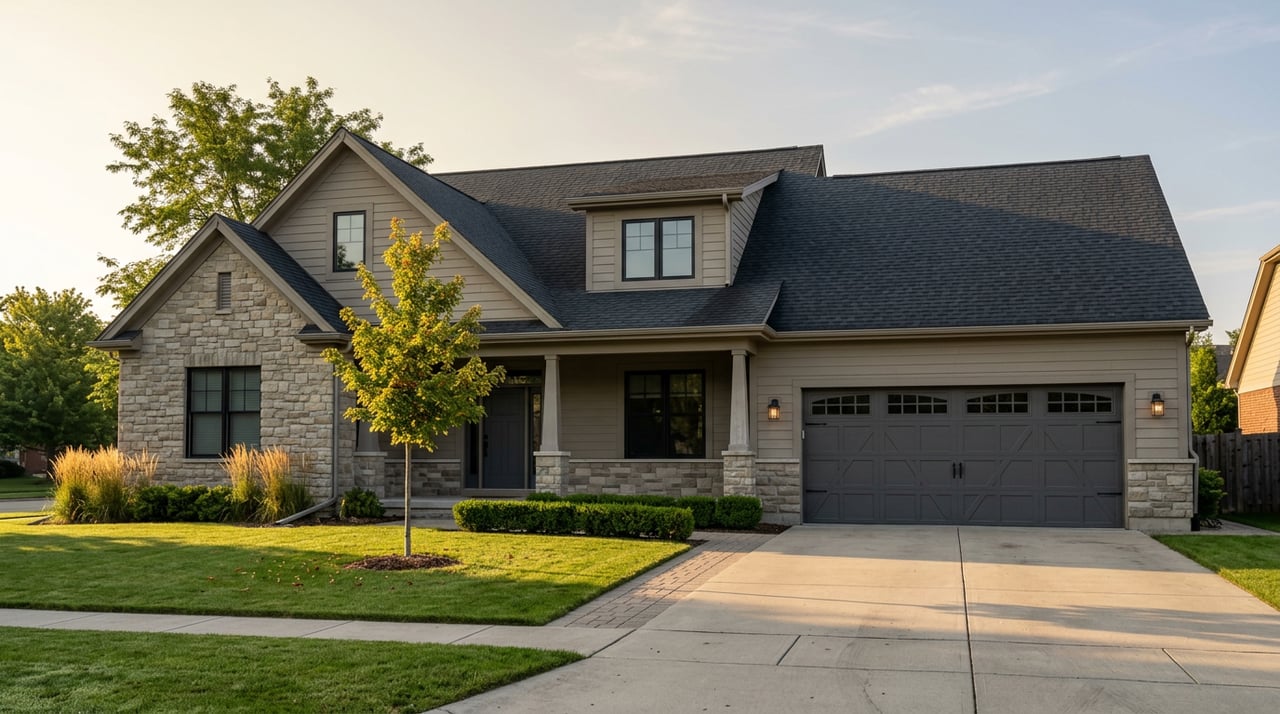
West Greeley's Home Prices Are Pricing In a Project That Might Not Get Built
September 3, 2026
As Colorado Politics reported, Brandon Wark said, "The election was a historic victory for the people who wanted to have a voice" the night Greeley voters repealed the zoning behind a $1.1 billion entertainment district planned for the city's west side.
That was February 24, 2026. More than six months later, the question Wark's group forced onto the ballot still hasn't been fully answered. A Weld District Court hearing was underway on August 27, and depending on how a judge rules, the zoning status of roughly 834 acres north of US Highway 34 could flip again. If you're shopping new construction anywhere near that corridor, this is worth understanding before you sign a contract, not after.
Greeley's pitch to Front Range buyers has been consistent for years: more house, less money. Over the three months ending May 2026, Redfin tracked a median sale price of $425,000 in Greeley, with homes running about $205 per square foot. Fort Collins closed July 2026 at a median of $667,000. Loveland landed closer to $550,000. Even accounting for how different sources slice the numbers, the per-square-foot gap tells the same story: Greeley buyers have been paying roughly $192 a square foot in early 2026, compared with $251 in Loveland, $277 in Fort Collins, and $285 in Longmont.
That's the headline most buyers arrive with. It's also incomplete, because Greeley isn't one market. It's several, layered on top of each other, and the gap between them is bigger than the gap between Greeley and its neighbors.
Depending on which listing data you pull, Greeley's City Center runs a median in the low $330,000s. North Central sits in the $340,000s. Move west toward the newer subdivisions and the number climbs fast. Kelly Farm, the master-planned neighborhood off West 4th Street and 50th Avenue, has posted a 12-month median sale price around $540,000 in one dataset and a current listing median closer to $590,000 in another. Either way, that's not a rounding error. It's a $200,000-plus spread inside a single city, and it maps almost exactly onto proximity to the west side.
Some of that gap is ordinary: newer construction, bigger lots, HOA amenities like Kelly Farm's community pool and its own trail connections to the Poudre River Trail. But a meaningful piece of the west-side premium has been priced against something else entirely: the promise that Catalyst and Cascadia, the joint entertainment district and mixed-use community planned for the land north of WCR 17, would turn that corner of Greeley into a regional destination with an arena, a water park, a hotel, and thousands of new homes.
That promise is currently in legal limbo.
Read that list straight through and the pattern is clear. This isn't a project working through routine permitting. It's a zoning decision that voters reversed, that a developer is actively suing to undo, and that a state Supreme Court ruling in a different city has thrown back into question. Nobody currently knows, with legal certainty, whether the 834 acres north of US 34 are entitled for the entertainment district and surrounding housing that's been marketed for two years.
If you're touring new construction in West Greeley right now, the sales materials and neighborhood write-ups you'll encounter were mostly written before or during the February vote, and they describe Catalyst and Cascadia as an active amenity reshaping the area. Some still cite plans for thousands of new housing units and a timeline that has the Eagles moving into a new arena for the 2028-29 season. That timeline assumed the zoning would hold. It didn't, at least not yet, and even if the courts eventually side with the developer, every month spent in litigation pushes the original schedule further out.
That gap between marketing copy and legal status is the thing to price correctly. It doesn't mean West Greeley is a bad place to buy. It means a buyer paying a premium for proximity to a not-yet-built amenity should treat that premium as a bet with a real range of outcomes, not a sure thing with a rendering attached.
| Scenario | Zoning status | What it means for a west-side buyer |
|---|---|---|
| Repeal upheld, litigation resolved | Land stays "holding agriculture," one-year rezoning moratorium in effect | There is no guaranteed restart afterward |
| Courts void the referendum | PUD zoning from Ordinance 30 restored | Project could resume, but likely with a compressed timeline and unresolved financing questions given the city's August decision to hold off on a tax measure |
| Ongoing appeals, no final ruling | Zoning remains contested | Anyone buying now is purchasing under genuine uncertainty about what gets built next door, and when |
None of these outcomes changes Greeley's broader affordability story. The city's price-per-square-foot advantage over Fort Collins and Loveland has nothing to do with Cascadia. It's a function of land costs, housing stock age, and a different mix of employers, from JBS Swift to Banner Health to the University of Northern Colorado. That value proposition holds whether or not an arena ever breaks ground north of WCR 17.
If a listing or a builder's pitch references Catalyst, Cascadia, or "the West Greeley entertainment district" as a selling point, ask a direct question: what is the current zoning on that specific parcel today, not what was planned two years ago. The city of Greeley's own project page at speakupgreeley.com has tracked the ordinance history and election results in real time, and it's a reasonable first stop before you take any builder's timeline at face value. Weld County's parcel records will also show you the zoning designation currently on file.
None of this is a reason to avoid West Greeley. It's a reason to separate the home you're buying from the amenity you might be hoping arrives with it. The first is real today. The second is still being argued in a courtroom a few miles from where you'd be signing your closing documents.
Is the Cascadia project dead? Not officially. The February 2026 vote repealed the zoning and triggered a one-year moratorium, but a lawsuit challenging that election is still active, with a hearing that was underway on August 27. The outcome could restore the original zoning, uphold the repeal, or extend the uncertainty further.
Does this affect home values in Greeley overall? The citywide affordability gap between Greeley and neighboring Fort Collins or Loveland is driven by broader factors like land costs and housing stock, not by Cascadia. The uncertainty is concentrated in the west side, where new-construction pricing has leaned on the project's promised amenities.
Should I wait to buy in West Greeley until this is resolved? That depends on your own timeline and priorities, not on predicting a court's ruling. What matters is going in with accurate information about current zoning rather than a builder's rendering from before the vote.
If you're weighing Greeley against Fort Collins, Loveland, or anywhere else on the Front Range and want a read on what a specific neighborhood's numbers actually mean, Manny P Sells Homes tracks these local shifts as they happen, not months later. Get Your Free Home Valuation and let's talk through what your budget actually buys right now.
This article is general information, not legal, tax or financial advice. Consult a qualified professional about your situation.
Stay up to date on the latest real estate trends.
Buying or selling a home is a big step—one you shouldn’t take alone. I combine local expertise, clear communication, and a results-driven approach to help you achieve your real estate goals. Let’s move forward together and make your next chapter a success.