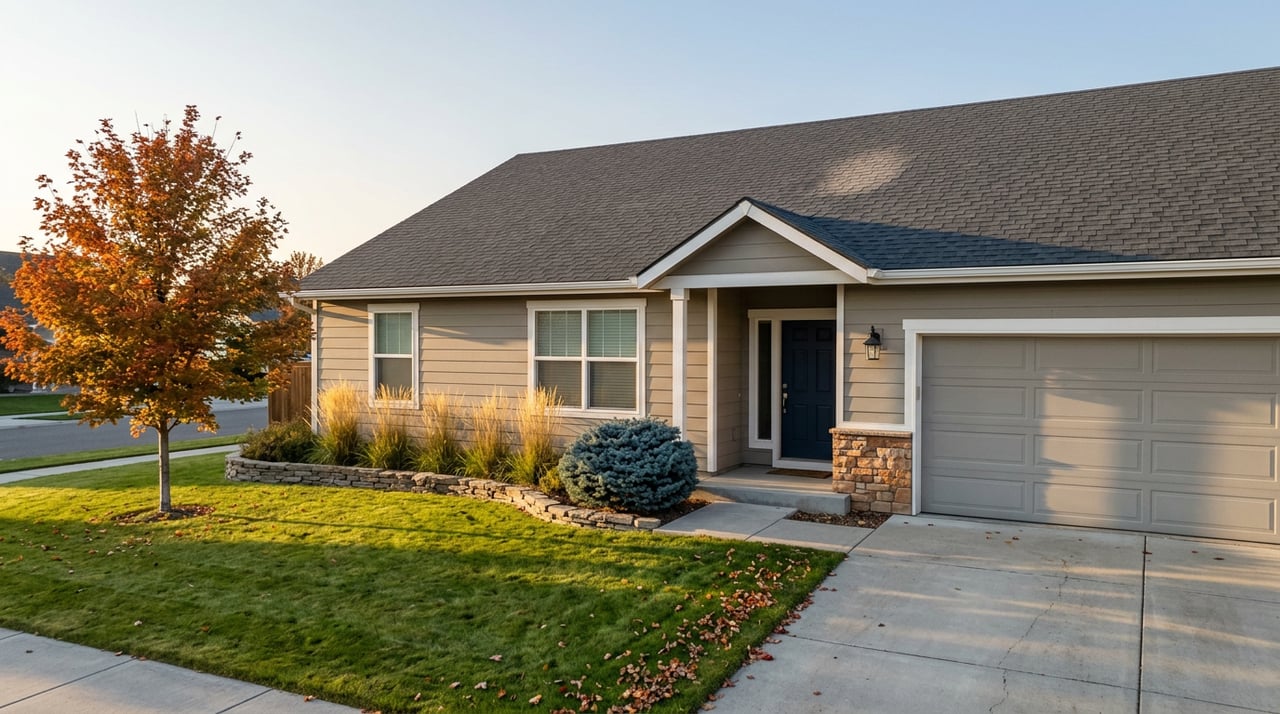
How Longmont’s County Line Can Affect Property Taxes
September 10, 2026
Pull up two Longmont listings priced within a few thousand dollars of each other. Same square footage, same decade built, same three-bedroom layout. Run the numbers on what you will actually owe every January, and one of those houses can cost you several hundred dollars more a year than the other, with the difference depending in part on the parcel's tax districts.
That gap has nothing to do with the roof, the kitchen, or the school attendance zone. It reflects the boundary between Boulder County and Weld County, along with the parcel-specific tax districts layered across Longmont.
Longmont is a home rule city that sits in both Boulder and Weld counties, with the built-up core historically anchored on the Boulder side and the city's growth over the last few decades pushing eastward into Weld. That is not a quirk of city limits drawn oddly on a map. It means two different county assessors value property here, two different treasurers collect the checks, and two different sets of taxing districts stack their mill levies on top of whatever the city itself charges.
The city's own share of that bill is the one constant. Longmont has levied a flat 13.42 mills since 1991, and under state statute the city cannot raise that rate without voters approving it in a November election. So if you are trying to explain why one Longmont address costs more to hold than another, the city portion is not where to look. It is identical everywhere inside city limits, Boulder side or Weld side.
The difference lives one layer up, in the county and special district levies that ride alongside it.
If you have shopped for a home anywhere in Colorado, you have probably absorbed a rule of thumb: better schools mean higher taxes, because school levies are usually the biggest line on the bill. It is a reasonable assumption almost everywhere. It does not work in Longmont.
Nearly the entire city, on both sides of the county line, is served by the same school system: St. Vrain Valley Schools, the RE-1J district that spans northern Boulder County along with adjacent slices of Weld and Larimer counties. A family looking at a listing in the older Old Town core and a family looking at new construction near the Weld County edge are very likely sending their kids to schools in the same district, funded by the same per-pupil formula. The school district is the same in both cases, but parcel-specific tax districts can still vary. The two are distinct parts of the tax picture.
That is the part worth sitting with before you go further. In most Colorado cities, a buyer can look at the school district on a listing and get a rough sense of the tax picture. In Longmont, that shortcut fails, because the district crosses the exact boundary that actually matters.
With the city levy fixed and the school district the same on both sides, the other factors include the county base rate and the patchwork of special districts, metro districts, and local assessment areas that get layered on top depending on which subdivision you are standing in.
Public property tax data shows the spread in plain numbers. On the Boulder County side of Longmont, median tax bills by ZIP code range from roughly $2,640 up toward $4,189 depending on the neighborhood, driven by which school assessment districts and metro districts apply to that specific parcel. On the Weld County side, the citywide median tax bill sits closer to $3,503 on a median home value in the mid $500,000s. These are not small rounding differences. They reflect real, stacked taxing authority that shows up when the mortgage servicer sets up the escrow account.
Weld County adds another wrinkle worth knowing if you are looking at newer subdivisions stretching toward the eastern edge of the city: the county has more than 300 separate taxing authorities on the books, covering everything from conservation districts to municipalities to individual school levies. Boulder County runs its own separate mill levy structure, set annually by each taxing entity based on what it needs to fund for the coming year. Two homes a few blocks apart can land in different combinations of those authorities simply because of where the parcel line falls, independent of price, size, or age.
None of this shows up as a single number you can Google for "Longmont property tax rate." It shows up parcel by parcel, and the only way to see it clearly is to look up the specific address.
Longmont's neighborhood names carry real weight for buyers weighing lifestyle and commute: Old Town's walkable core, the newer streets in Renaissance, the established blocks of Somerset Meadows near the Diagonal Highway, Fox Meadows, Idaho Creek. Those names tell you a lot about house style, lot size, and proximity to downtown. They tell you nothing reliable about which county assessor is going to value your home, because the county line does not track tidily with subdivision boundaries. A buyer comparing two neighborhoods on reputation alone, without checking which side of the line each one sits on, is comparing incomplete information.
This matters most at two moments in a transaction. The first is when you are stacking up your monthly payment across a short list of finalists, because the difference between a Boulder County bill and a Weld County bill on similarly priced homes can be the size of a car payment over a year. The second is at closing, when the number on the settlement statement should match what you budgeted for, not surprise you.
Here is a quick side by side of what actually differs between the two sides of the line inside Longmont, based on current county administration:
| Boulder County side | Weld County side | |
|---|---|---|
| Assessor | Boulder County Assessor | Weld County Assessor |
| School district | St. Vrain Valley RE-1J | St. Vrain Valley RE-1J (same district) |
| City mill levy | 13.42 mills (flat) | 13.42 mills (flat) |
| What varies | County levy, school assessment area, metro/special districts stacked by subdivision | County levy, number and type of overlapping special districts |
Boulder County and Weld County explain their assessed-value appeal processes; you would file with the assessor in the county where the parcel sits, and the assessed value you are appealing was calculated using that county's comparable sales data.
If you are cross shopping homes in Longmont right now, treat the county line as a checklist item, not an afterthought:
None of this changes what a home is worth to you as a place to live. It changes what it costs you to hold it, month after month, for as long as you own it. That is exactly the kind of number that belongs in your comparison spreadsheet next to square footage and lot size, not something you discover for the first time when the first escrow statement arrives.
If you are weighing two Longmont neighborhoods and want a straight answer on which side of the county line a specific address falls, or what that means for your actual monthly number, Manny P Sells Homes can pull the parcel details and walk you through it before you write an offer. Get Your Free Home Valuation and we will factor in parcel-specific tax details.
This article is general information, not legal, tax or financial advice. Consult a qualified professional about your situation.
Stay up to date on the latest real estate trends.

Buying or selling a home is a big step—one you shouldn’t take alone. I combine local expertise, clear communication, and a results-driven approach to help you achieve your real estate goals. Let’s move forward together and make your next chapter a success.